


If you have rosacea-prone skin, you already know the frustration. The product that worked for your friend leaves your face burning. The "gentle" formula triggers a flare. Redness shows up without warning, and building a routine feels more like defusing a bomb than practicing self-care.
The good news: effective skincare for rosacea is absolutely possible. It just requires understanding what your skin actually needs, and choosing physician-formulated products designed to support it, not stress it.
What Is Rosacea-Prone Skin?
Rosacea is a chronic skin condition that causes persistent redness, visible blood vessels, flushing, and increased sensitivity. It affects an estimated 16 million Americans and is most common in adults with fair to medium skin tones, though it can appear in all skin types.
At its core, rosacea involves two key issues: chronic inflammation and a compromised skin barrier. When the skin barrier is weakened, it struggles to lock in moisture and keep irritants out. This creates a cycle of sensitivity, dryness, and reactive redness that standard skincare routines can make worse, not better.
What Triggers Rosacea Flare-Ups?
Triggers vary from person to person, but some of the most common include sun exposure, heat, spicy foods, alcohol, emotional stress, and wind. On the skincare side, fragrances, alcohol-based toners, harsh exfoliants, and overly active formulas are frequent offenders.
Identifying your personal triggers is one of the most powerful things you can do. Keep a simple log of flare-ups and what preceded them. Patterns will appear, and they will guide your routine decisions far better than any trend.
Key Principles for a Rosacea Skincare Routine
A sound skincare routine for rosacea is built on four principles: protect the barrier, minimize irritants, introduce products slowly, and keep it simple. The more steps and active ingredients you add, the more opportunities there are for a reaction. Fewer, well-chosen physician-formulated products outperform complex, multi-step routines every time.

Step-by-Step Rosacea-Friendly Skincare Routine
Step 1: Cleanse with Care
Cleansing is where many rosacea routines go wrong. Hot water, scrubbing, and stripping formulas all compromise the barrier before your routine even begins.
Look for a gentle cleanser for sensitive skin that removes impurities without disrupting skin balance. The VITAL C Hydrating Facial Cleanser is a physician-formulated formula that cleanses without stripping, infusing skin with vitamins C and E as it works. Dermatologist Dr. Lindsey Zubrisky, MD, FAAD, calls it both effective and genuinely gentle, noting it leaves skin soft, refreshed, and visibly radiant.
Rinse with lukewarm water and pat dry. Never rub.
Step 2: Apply Soothing, Hydrating Ingredients
After cleansing, the focus shifts to calming and replenishing. This is where a well-chosen serum does its most important work.
The VITAL C Hydrating Anti-Aging Serum is the product that started it all for IMAGE Skincare. Founder and licensed esthetician, Janna Ronert, created the VITAL C line to solve her own journey with rosacea. It remains one of the most trusted physician-formulated options for dry, sensitive, and redness-prone skin.
Our #1 bestselling serum for over two decades, it delivers antioxidant vitamins C and E alongside hydrating ingredients to soothe reactivity and support the barrier without aggravating it. It also pairs exceptionally well with mineral SPF in your morning routine. Vitamin C neutralizes the free radicals that UV filters cannot block, giving rosacea skin a stronger, more comprehensive layer of daily protection.
Key ingredients to look for in this step: hyaluronic acid, a humectant that draws moisture into the skin; niacinamide, a form of vitamin B3 that helps reduce redness and supports the barrier; and ceramides, the lipids that seal the barrier and reduce water loss.
Step 3: Moisturize to Support the Skin Barrier
Moisturizer is non-negotiable for rosacea. A well-formulated moisturizer locks in hydration and reinforces the barrier against environmental stressors throughout the day.
For redness-prone skin care, the VITAL C hydrating repair crème is another product this collection was built around. IMAGE Skincare founder Janna Ronert, a licensed esthetician, created the VITAL C line to solve her own journey with rosacea. It remains one of the most trusted physician-formulated options for dry, sensitive, and redness-prone skin.
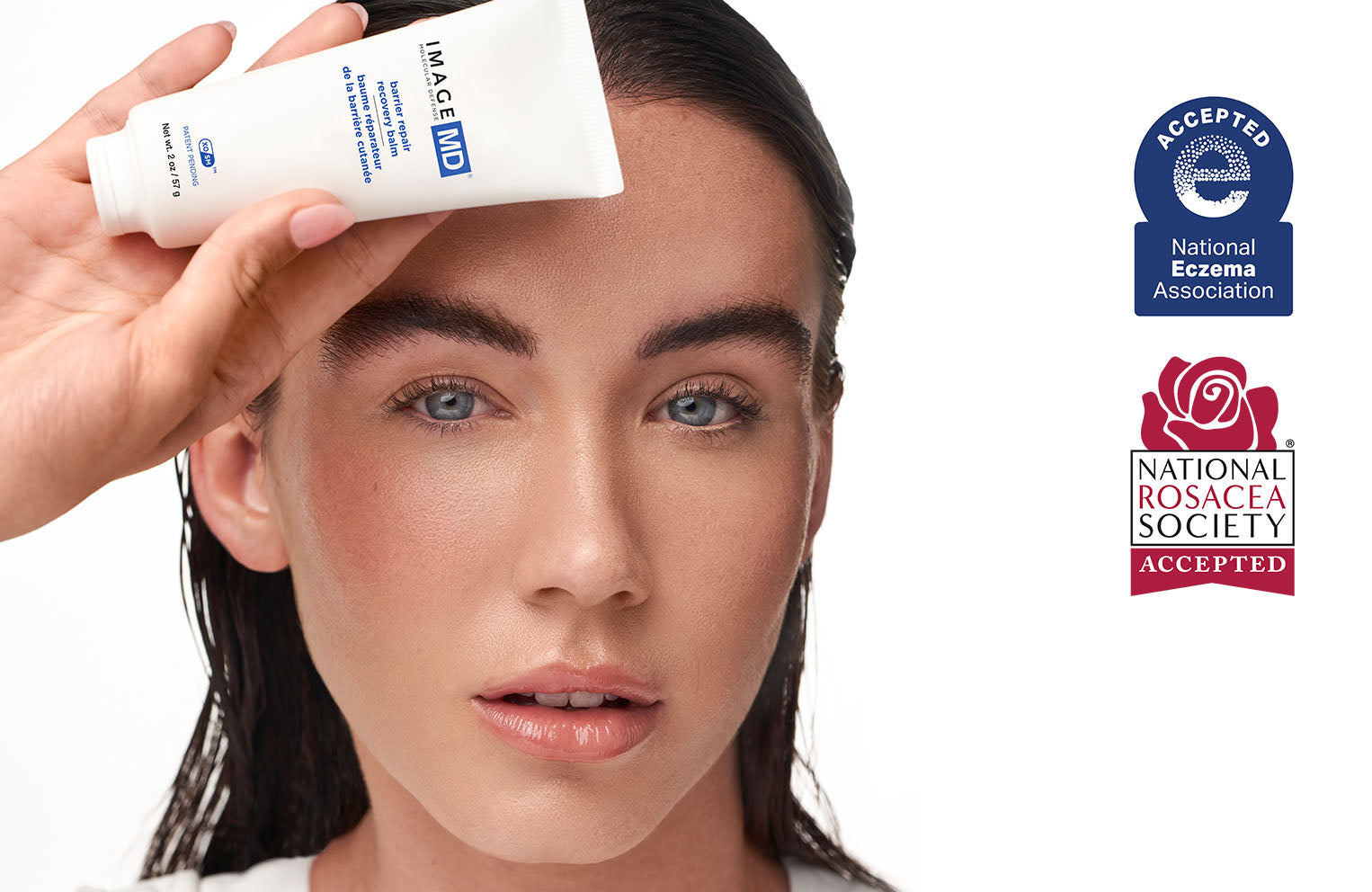
For more advanced barrier support, the IMAGE MD barrier repair recovery balm is a clinically tested formula designed to soothe vulnerable, redness-prone skin while rebuilding the skin barrier. It is one of the few skincare products to earn the National Rosacea Society Seal of Acceptance, making it a trusted choice for rosacea-prone skin. Because it is a professional-grade formula, the recovery balm is available exclusively through licensed IMAGE Skincare estheticians, who can recommend it based on your skin's specific needs. Find an IMAGE Skincare professional near you.
Step 4: Protect with Daily Sun Protection
Sun exposure is one of the most universal rosacea triggers, and SPF is one of the most evidence-backed tools for managing it long-term. Skipping sunscreen is one of the fastest ways to worsen persistent redness and barrier breakdown.
For rosacea-prone skin, mineral sunscreens are typically better tolerated than chemical formulas. Mineral filters sit on top of the skin and physically deflect UV rays rather than absorbing and converting them to heat, which can trigger flushing. The DAILY PREVENTION Advanced Smartblend Mineral Moisturizer SPF 75 is an ideal choice for sensitive and barrier-compromised skin. Powered by IMAGE Skincare's breakthrough XOSM Technology, it drives nourishing ingredients deeper while delivering broad-spectrum protection that feels lightweight and never heavy.
Ingredients to Look for and Avoid in Rosacea Skincare
Look for: Hyaluronic acid, ceramides, niacinamide, aloe vera, chamomile, glycerin, panthenol, and mineral SPF filters like zinc oxide and titanium dioxide.
Avoid: Fragrance, denatured alcohol, menthol, eucalyptus, high-concentration exfoliating acids, and physical scrubs.
Note: not all natural ingredients are gentle. Essential oils, citrus extracts, and certain botanical actives are common sensitizers for rosacea skin.
Common Skincare Mistakes That Trigger Flare-Ups
Over-exfoliating is the number one mistake. Even a mild exfoliant can push reactive skin into a flare. The second most common error is switching products too often. Rosacea skin needs consistency; frequent changes prevent your barrier from stabilizing. Skipping moisturizer because your skin feels flushed is also counterproductive. Hydration and barrier support are protective, not irritating.
When to Adjust Your Routine
Signs your routine needs simplifying: persistent burning, stinging, new breakouts, or increased redness after adding a product. When in doubt, strip back to basics: gentle cleanser, barrier moisturizer, mineral SPF. Reintroduce one product at a time with at least two weeks between each addition.
If flare-ups are frequent, severe, or not responding to at-home care, consult a board-certified dermatologist. Prescription options including topical azelaic acid and metronidazole can be highly effective alongside a smart, consistent routine.
Stop Rosacea Flare-Ups with a Routine Built for Your Skin
Managing rosacea is a long game. The goal is not to eliminate sensitivity overnight, but to strengthen your skin's resilience over time through barrier-focused, physician-formulated skincare.
Explore the IMAGE Skincare Redness + Sensitivity Collection or take the IMAGE Skin Quiz to get personalized recommendations for your skin type and concerns. For more expert guidance, visit our redness solutions blog.
Your skin deserves a routine as committed as you are.
About the Author: Written by Christina Angelacos
Christina is a Senior Editor at IMAGE Skincare focused on clinical skincare innovation, ingredient science, and skin longevity. Passionate about holistic wellness, she believes our healthiest skin comes from the intersection of advanced skincare and mindful living.