





Vitamin C is one of the most dermatologist-recommended ingredients in skincare, but not all Vitamin C is created equal. If you've ever stared at an ingredient label and wondered why one product says "L-ascorbic acid" while another lists something like "tetrahexyldecyl ascorbate," you're not alone. Those long chemical names can make an already-crowded skincare aisle feel even more overwhelming.
Here's the clarity you need: what the different types of Vitamin C actually are, how they work, and which one belongs in your routine.
Why Vitamin C Is a Skincare Powerhouse
Before we break down the forms, it helps to understand why Vitamin C earns its place in so many routines. As a potent antioxidant, it brightens uneven skin tone, helps fade discoloration, supports the skin's natural collagen production, and defends against the environmental stressors that accelerate visible aging. Antioxidants like Vitamin C are foundational to any preventative skincare approach, and consistent use is what delivers visible change over time.
What Is L-Ascorbic Acid?
L-ascorbic acid is the pure, biologically active form of Vitamin C. It's the form your skin can recognize and use immediately, and it has decades of clinical research behind it.
Why It's Considered the Gold Standard
Because L-ascorbic acid is already in its active state, it gets to work quickly. Studies support its ability to brighten skin, reduce the appearance of dark spots, and improve overall radiance. For those who want potent, fast-acting results, this is the form most studied and validated.
The Stability Challenge
There's a trade-off. L-ascorbic acid is notoriously unstable and breaks down when exposed to light and air, which is why formulation and packaging matter enormously. A poorly packaged Vitamin C serum can oxidize before you even notice, turning orange and losing its efficacy.
Potential Downsides
At concentrations above 15-20%, L-ascorbic acid can be irritating, especially for reactive or sensitive skin. It also performs best at a low pH, which can further contribute to sensitivity. For those new to Vitamin C or prone to irritation, it's not always the best starting point.
Takeaway: L-ascorbic acid is best for experienced skincare users looking for maximum potency.
What Are Vitamin C Derivatives?
Derivatives are stabilized forms of Vitamin C, engineered to convert into active Vitamin C once they're absorbed into skin. Common forms include sodium ascorbyl phosphate, magnesium ascorbyl phosphate, tetrahexyldecyl ascorbate (THD ascorbate), and ascorbyl glucoside.
Why Formulators Use Them
Derivatives offer several formulation advantages: they're more stable at room temperature, have a longer shelf life, and are typically gentler on skin. They can also be delivered in a wider range of textures and formulas, which makes them more versatile.
The Trade-Off
Derivatives may produce results more gradually than pure L-ascorbic acid. For some skin types, that slower pace is actually a benefit, as it reduces the risk of irritation while still delivering meaningful improvement over time.

L-Ascorbic Acid vs. Derivatives: What's the Real Difference?
When comparing L-ascorbic acid and Vitamin C derivatives across the factors that matter most, a clear picture appears.
Potency: L-ascorbic acid is the higher-potency option. As the pure, active form of Vitamin C, it delivers the most direct and fast-acting results. Derivatives range from moderate to high potency depending on the specific form and concentration used.
Stability: This is where derivatives have a significant advantage. L-ascorbic acid is highly unstable and prone to oxidation when exposed to light and air. Derivatives are inherently more stable, maintaining their efficacy for longer and requiring less demanding packaging conditions.
Irritation risk: L-ascorbic acid carries a higher irritation risk, particularly at concentrations above 15-20% or for those with sensitive skin. Derivatives are formulated to be gentler, making them a more accessible choice for reactive skin types.
Speed of results: L-ascorbic acid tends to produce faster, more immediately visible results because it's already in its active form. Derivatives work more gradually, converting to active Vitamin C after absorption, a slower process that many users find easier to tolerate.
Skin-type compatibility: L-ascorbic acid is best suited to experienced Vitamin C users with resilient skin. Derivatives are the better fit for sensitive, dry, or combination skin, as well as anyone just beginning to incorporate Vitamin C into their routine.
Understanding these differences makes it easier to match the right form of Vitamin C to your specific skin goals and tolerance level.
Which Type of Vitamin C Is Best for Your Skin Type?
Choosing the best type of Vitamin C for your skin really comes down to your skin's tolerance and your goals.
Sensitive skin: Look for derivatives, which are gentler and less likely to cause redness.
Dry skin: Oil-soluble forms like THD ascorbate penetrate deeply without disrupting the moisture barrier.
Oily or acne-prone skin: Lightweight water-soluble derivatives work well without clogging pores.
Experienced Vitamin C users: L-ascorbic acid delivers the most potent, fastest results.
Beginners: Start with a gentler derivative form and build from there.
How Modern Formulation Is Closing the Gap
Here's what the ingredient debate often misses: advanced delivery systems have changed the game. Today's best formulations are engineered to maximize the performance of derivatives, meaning the gap between "potent" and "gentle" is narrower than ever. When a derivative like THD ascorbate is paired with supporting antioxidants and precision-delivery technology, the result can rival pure L-ascorbic acid in visible efficacy while staying far more tolerable.
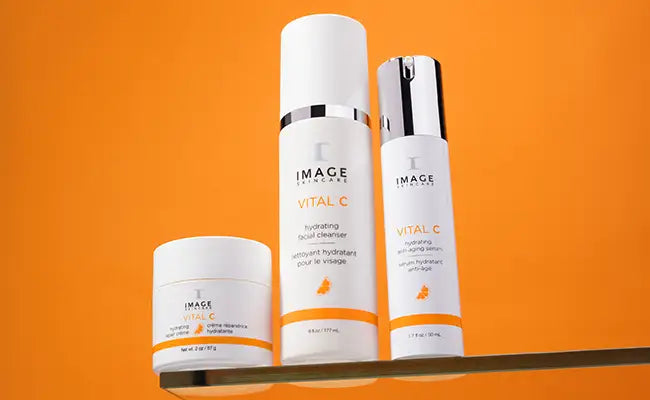
The VITAL C collection is a strong example of this philosophy in practice, formulated with multi-benefit Vitamin C to target redness and dehydration in a daily dose that's accessible for all skin types.
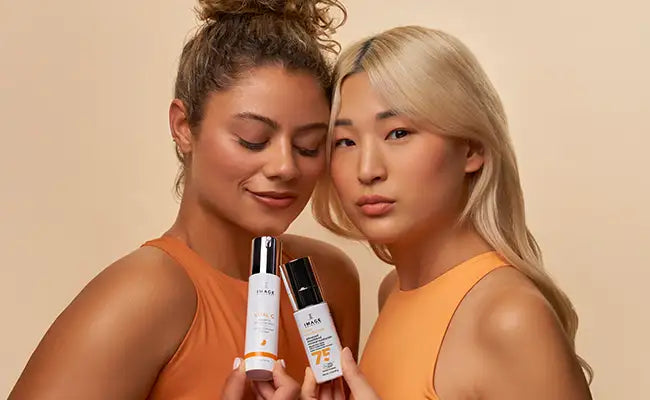
The VITAL C Hydrating Anti-Aging Serum is our #1 seller for good reason. This serum is built around tetrahexyldecyl ascorbate, an oil-soluble Vitamin C derivative that penetrates skin more deeply than water-soluble forms. It delivers antioxidant protection and brightening benefits where they're needed most. Paired with hyaluronic acid for plumping hydration, peptides to visibly firm and smooth, and soothing botanicals to calm redness, it addresses multiple signs of aging in a single daily step.
Because it's formulated with a stabilized derivative rather than raw L-ascorbic acid, it's gentle enough for sensitive and dry skin types while still delivering visible results. Clinically proven to reduce redness, improve radiance, and reduce the look of lines. It's an ideal entry point for anyone new to Vitamin C, and a reliable daily staple for those who've been using it for years.
How to Choose a High-Quality Vitamin C Product
Not all Vitamin C products are formulated equally. Here's what to look for:
- Opaque, air-restrictive packaging to protect stability
- Supporting antioxidants like Vitamin E and ferulic acid, which extend efficacy
- Clinically backed concentrations that are right for your skin type
- Brand transparency about ingredients and clinical evidence
How to Add Vitamin C to Your Routine Without Irritation
Even the gentlest Vitamin C deserves a thoughtful introduction:
- Start every other morning and gradually increase use as your skin adjusts
- Always follow with SPF, as Vitamin C and sun protection are a powerful pairing
- Avoid layering with strong exfoliants in the same step until your skin is acclimated
- Patch test any new formula before applying to your full face
- The Bottom Line: Strength vs. Stability Isn't a Competition
L-ascorbic acid delivers high-performance results for skin that can handle it. Derivatives are strategic, skin-friendly innovation that makes Vitamin C's benefits accessible to more people. The best Vitamin C for your skin isn't the strongest one. It's the one you'll use consistently, in a formula your skin responds well to.
When in doubt, choose quality formulation over concentration alone. The science has evolved. Your routine can too.
About the Author
Written by Christina Angelacos. Christina is a Senior Editor at IMAGE Skincare focused on clinical skincare innovation, ingredient science, and skin longevity. Passionate about holistic wellness, she believes our healthiest skin comes from the intersection of advanced skincare and mindful living.

 Your Privacy Choices