






If you have dry or sensitive skin, you may have been told to avoid Vitamin C, or you've tried a serum that left your skin feeling tight, irritated, or worse. That experience is common, but it's not the full story. The right vitamin C serum for dry skin doesn't strip or aggravate. When formulated thoughtfully, Vitamin C can support the skin barrier, improve hydration, and help dry skin look brighter and healthier over time.
Here's what you need to know about Vitamin C and how to make it work for dry, dehydrated, or sensitive skin.
What Causes Dry Skin and Why It Changes How Ingredients Work
Dry Skin vs. Dehydrated Skin
These two conditions are often confused, but they're not the same thing. Dry skin is a skin type characterized by a lack of lipids, the natural fats that keep the skin's surface intact and protected. Dehydrated skin is a condition caused by a lack of water, and it can affect any skin type, including oily skin. Many people experience both at the same time, which compounds sensitivity and makes the skin more reactive to active ingredients.
The Role of the Skin Barrier
The skin barrier is made up of lipids, ceramides, and natural moisturizing factors (NMFs) that work together to keep moisture in and environmental stressors out. When this barrier is compromised, the skin loses water more rapidly, becomes more prone to irritation, and has a harder time tolerating active ingredients. This is why active ingredients, including some Vitamin C formulas, can feel uncomfortable on dry skin. It's not always the ingredient itself. It's the skin's reduced ability to buffer it.
The Science Behind Vitamin C in Skincare
What Vitamin C Does for Skin
Vitamin C is one of the most studied antioxidants in skincare, and for good reason. It protects skin against oxidative stress caused by UV rays and environmental pollutants, supports the skin's natural collagen production, helps visibly brighten uneven tone, and plays a meaningful role in overall skin resilience. Consistent use is what delivers visible results, making it a foundational ingredient in any long-term skincare approach.
Why Vitamin C Is One of the Most Studied Skincare Ingredients
Backed by decades of clinical research, Vitamin C has proven benefits when properly formulated. That last part matters. Effectiveness depends on delivery method, stability, and how well the formula tolerates different skin types. This is especially true for dry and sensitive skin, where not all forms of Vitamin C behave the same way.
Why Some Vitamin C Products Can Feel Drying
Acidity, Stability, and Skin Comfort
Traditional L-ascorbic acid, the most potent form of Vitamin C, requires a low pH to remain stable and effective. That low pH environment can be disruptive to the skin barrier, which functions best at a slightly higher pH. For dry skin already dealing with a compromised barrier, this acidity can trigger stinging, redness, or tightness.
Why Dry Skin Often Reacts First
Dry skin has a reduced lipid content, which means less natural protection against active ingredients. This leads to increased transepidermal water loss (TEWL), and when discomfort follows, most people simply stop using the product. Inconsistent use leads to poor results, which is why choosing a formula your skin can actually tolerate is more important than chasing the highest concentration.
How Vitamin C Can Support Hydration and Barrier Health
Vitamin C's Role in Strengthening the Skin Barrier
Here's the reframe: Vitamin C isn't a threat to dry skin. Poorly matched formulas are. Vitamin C helps support lipid synthesis, encourages healthier barrier function, and when paired with the right ingredients, can improve moisture retention over time. A stronger barrier means skin holds onto hydration more effectively, which directly benefits dry skin types.
Antioxidants and Moisture Work Better Together
Antioxidants protect skin against environmental stress that degrades the barrier daily. Hydration improves how skin tolerates active ingredients. When these two elements work together in a single formula, the result is skin that is both protected and nourished. Learn more about how Vitamin C supports your skin's daily health.
Choosing the Right Vitamin C for Dry Skin
Look for Stabilized Forms of Vitamin C
For dry and sensitive skin types, oil-soluble or encapsulated forms of Vitamin C are generally better tolerated than traditional L-ascorbic acid. These stabilized derivatives penetrate without disrupting the skin's pH balance, deliver antioxidant benefits deeper into the skin, and produce more consistent results over time without the irritation risk.
Supporting Ingredients Matter
A well-formulated Vitamin C product for dry skin should include more than just antioxidants. Look for hyaluronic acid for deep hydration, ceramides to reinforce the barrier, emollients and nourishing oils to soften and protect, and soothing agents to minimize redness. Professional skincare brands often pair Vitamin C with these barrier-supporting ingredients specifically to improve tolerance and long-term efficacy.
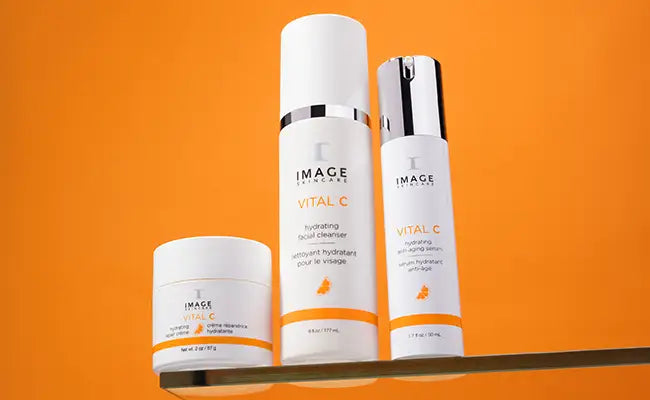
A hydration-first approach to Vitamin C is exactly what the VITAL C collection is built around. Formulated with multiple stabilized forms of Vitamin C alongside deeply hydrating and soothing ingredients, it was developed to deliver antioxidant protection and visible brightening without compromising comfort, making it a trusted choice for dry and sensitive skin types. Not sure which formula is right for your skin? The IMAGE Skincare Regimen Builder can help narrow it down.

How to Use Vitamin C When You Have Dry Skin
Morning Use for Antioxidant Protection
Vitamin C is most effective when applied in the morning. After cleansing, apply your serum before moisturizer to help defend against the environmental stressors your skin encounters throughout the day. Always follow with SPF. Vitamin C and broad-spectrum sun protection work synergistically to prevent the visible signs of photoaging.
Layering Vitamin C Without Drying the Skin
Pair your Vitamin C serum with a hydrating moisturizer or facial oil to replenish the barrier after application. Avoid over-exfoliating, which can further compromise a dry skin barrier. Prioritize consistency over high concentrations. A gentle, stabilized formula used daily will outperform a high-potency formula used sporadically.
Vitamin C and Dry Skin Can Work Together
Dry skin doesn't need less Vitamin C. It needs the right kind. When hydration, barrier support, and antioxidant protection are formulated to work together, Vitamin C becomes one of the most effective tools available for improving how dry skin looks and feels. Brighter tone, improved resilience, and better moisture retention are all within reach when the formulation is right.
About the Author
Written by Christina Angelacos. Christina is a Senior Editor at IMAGE Skincare focused on clinical skincare innovation, ingredient science, and skin longevity. Passionate about holistic wellness, she believes our healthiest skin comes from the intersection of advanced skincare and mindful living.

 Your Privacy Choices