


Collagen is the protein that keeps skin firm, smooth, and resilient. When production slows down, the signs of collagen loss in the face become hard to ignore: Fine lines deepen, skin loses its bounce, and texture starts to shift.
If you want to know how to stimulate collagen in your face, the science is clear. The best vitamin C serum for collagen and a clinically proven retinol for skin firmness are the two most effective tools available at home, and using both together is the most powerful strategy for long-term collagen health.
What Causes Collagen Loss in the Skin?
Collagen production begins declining in the mid-to-late twenties, dropping roughly 1% per year after that. By the time most people notice visible changes, the process has been underway for years.
Several factors accelerate it. UV exposure is the single greatest external cause, breaking down collagen fibers and suppressing new synthesis. Environmental pollution, smoking, high sugar intake, and chronic stress all trigger oxidative damage that degrades collagen at the cellular level. Hormonal shifts, particularly around perimenopause and menopause, drive a steep drop in collagen density that can feel sudden but has been building quietly for years.
None of this is inevitable, but it is progressive. That is why starting a preventative skincare routine early produces such a measurable difference over time.

Signs of Collagen Loss in the Face
When collagen levels fall, skin has less structural support. The most common signs include fine lines and wrinkles forming around the eyes, mouth, and forehead; loss of firmness along the jawline and cheeks; a dull, rough texture that feels different to the touch; and skin that appears thinner or slightly deflated in areas that once looked full.
These changes are gradual, which is exactly why consistent use of active ingredients matters far more than occasional treatments.
When Do You Stop Producing Collagen?
You never fully stop, but output decreases significantly over time. Production slows in the mid-twenties and continues declining through each decade. By the fifties and sixties, the skin's ability to synthesize new collagen is substantially reduced, making topical actives and a protective daily routine even more critical for maintaining visible density and firmness.
How to Stimulate Collagen in Your Face
Stimulating collagen at home comes down to four consistent habits: using clinically active ingredients that trigger cell renewal, protecting existing collagen from UV and environmental damage, supporting skin hydration and barrier integrity, and staying consistent long enough for results to compound.
There is no shortcut, but there is a science-backed strategy. The best vitamin C serum for collagen provides two things at once: it is a required cofactor for collagen fiber synthesis, and a potent antioxidant that neutralizes the free radicals breaking existing collagen down. Retinol for skin firmness works by accelerating cellular renewal and signaling fibroblasts to increase collagen production in the dermis. Together, they address both sides of the collagen equation.
Why Retinol and Vitamin C Work Well Together
Retinol and vitamin C work through complementary mechanisms that make them more effective as a pair than either ingredient alone. Retinol works primarily at night, speeding up cellular renewal and stimulating collagen synthesis deep in the skin. Vitamin C works best in the morning, providing antioxidant defense against UV-triggered free radicals while actively supporting the formation of new collagen fibers.
Using both gives your skin the renewal signal and the protection it needs to preserve what is being rebuilt. For practical guidance on how to properly layer your skincare products to get maximum benefit from both actives, sequencing and timing make a measurable difference in results.
How Retinol for Skin Firmness Actually Works
Retinol, a form of vitamin A, accelerates skin cell turnover. This pushes healthy new cells to the surface faster and signals the fibroblasts responsible for making collagen to ramp up production. Over time, consistent retinol use visibly improves firmness, smooths texture, and reduces the depth of fine lines.
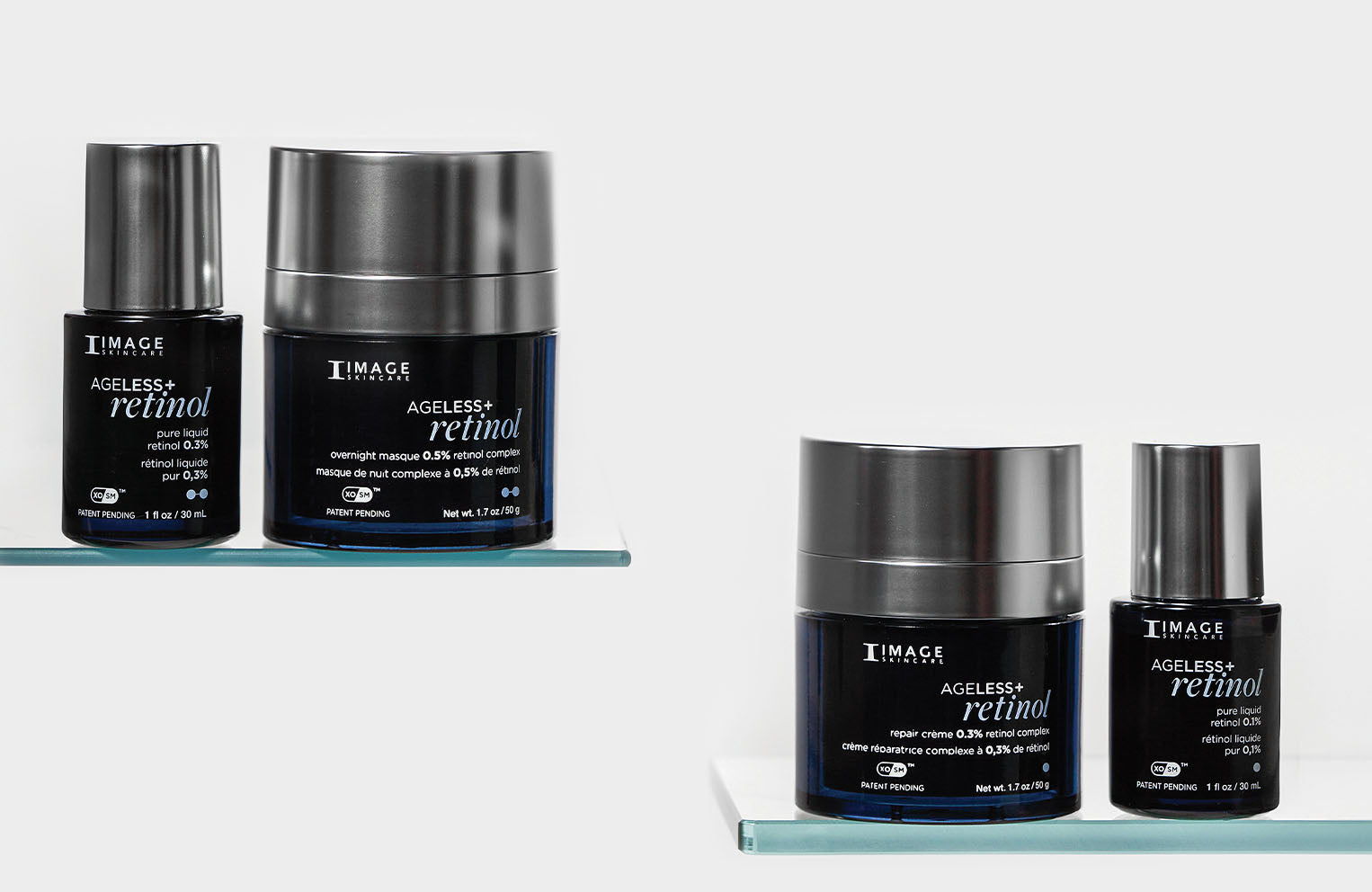
IMAGE Skincare's AGELESS+ Retinol collection uses proprietary XOSM Technology, a smart encapsulation system that delivers powerful antioxidants alongside retinol to protect new cells and reduce visible redness. The result is a physician-formulated line designed for daily, long-term use across every level of retinol experience:
The AGELESS+ Retinol Repair Crème 0.3% is the entry point for new retinol users. In a 4-week clinical study, 97% of participants agreed skin appeared brighter with more even tone.
The AGELESS+ retinol pure liquid retinol 0.3% suits all skin types already acclimated to retinol. 80% of participants agreed skin was firmer with improved elasticity.
For advanced signs of aging, the AGELESS+ Retinol Treatment Crème 1.2% delivers extra-strength results. In a 12-week clinical study, 100% of participants agreed skin was firmer, hydrated, and lifted after just 4 weeks.
The Best Vitamin C Serum for Collagen: What to Look For
Not all vitamin C serums are created equal when it comes to collagen support. The most effective formulas combine stable, bioavailable forms of vitamin C with complementary actives that amplify collagen synthesis, antioxidant protection, and visible brightening.
For advanced firming and collagen support, the IMAGE MD Restoring Power-C Serum is the performance-level choice. In a 12-week clinical study, 94% of participants reported visible restoration of firmness and elasticity, and 89% agreed skin appeared brighter. Clinical measurement showed a 14.16% increase in elasticity at four weeks and a 28.73% increase in firmness at eight weeks.
For sensitive skin or those new to professional vitamin C, the VITAL C Hydrating Anti-Aging Serum is IMAGE Skincare's original bestselling formula. Co-founder Janna Ronert created it to treat her own redness-prone skin, and it remains one of the most trusted vitamin C serums in professional skincare, with 100% of participants in a 4-week clinical study agreeing it hydrates skin.
Explore the full VITAL C collection to find your match.
How to Use Retinol and Vitamin C in Your Routine
Morning: Vitamin C for Protection. Apply your vitamin C serum to clean skin before moisturizer and SPF. Vitamin C neutralizes free radicals triggered by UV exposure, working alongside sunscreen to provide stronger, more lasting protection against collagen breakdown.
Evening: Retinol for Renewal. Apply retinol at night after cleansing. Start two to three evenings per week and increase frequency as your skin builds tolerance. Follow with a nourishing moisturizer to support the barrier and reinforce the firming benefits of retinol.
Supporting Products: Hydration and SPF. Hyaluronic acid and barrier moisturizers support skin while retinol works, preventing the dryness that leads many people to quit before results appear. Daily SPF is non-negotiable: it is the single most effective way to preserve the collagen your actives are working to rebuild. For anyone also addressing volume and elasticity concerns, read more on how to improve skin elasticity and firmness alongside your collagen routine.
Common Mistakes That Accelerate Collagen Loss
Overusing actives too quickly causes barrier disruption and inflammation, both of which degrade collagen. Inconsistent routines interrupt the cellular renewal cycle retinol depends on. Neglecting hydration makes skin more vulnerable to irritation. And skipping SPF consistently undoes the work of every other product in your routine. Protecting existing collagen is just as important as stimulating new production.
FAQs
Can retinol and vitamin C be used together? Yes. Use vitamin C in the morning and retinol at night for the most effective and well-tolerated pairing.
How long does it take to see results from retinol for skin firmness? Brightness and texture improvements typically appear within four to six weeks. Visible firming and meaningful fine line reduction generally require twelve weeks of consistent daily use.
Are there side effects? Retinol can cause initial dryness or sensitivity, particularly at higher concentrations. Starting at a lower dose and building frequency gradually minimizes this. AGELESS+ Retinol's XOSM® Technology is specifically engineered to reduce visible redness while maximizing retinol performance.
Can these ingredients help with acne scars? Both can improve post-acne discoloration. Retinol accelerates cell turnover to fade surface marks, while vitamin C inhibits melanin overproduction to reduce pigmentation over time.
Start Rebuilding Collagen with the Right Ingredients
Collagen loss is gradual, and rebuilding its visible effects requires the same consistency. The best vitamin C serum for collagen and a proven retinol for skin firmness are the most clinically supported actives available for this goal.
Start Rebuilding Collagen with the Right Ingredients
Collagen loss is gradual, and rebuilding its visible effects requires the same consistency. The best vitamin C serum for collagen and a proven retinol for skin firmness are the most clinically supported actives available for this goal. Not sure where to begin? Take the IMAGE Skin Quiz to find the right collagen-supporting routine for your skin type and goals.
About the Author: Written by Christina Angelacos
Christina is a Senior Editor at IMAGE Skincare focused on clinical skincare innovation, ingredient science, and skin longevity. Passionate about holistic wellness, she believes our healthiest skin comes from the intersection of advanced skincare and mindful living.