


If you've ever tried to decode a sunscreen label, you already know the confusion is real. With so many types of sunscreen on the market, it can be hard to know which formula actually delivers. The mineral vs chemical sunscreen debate is one of the most searched questions in skincare, and the answer matters, because the type of protection you choose directly affects your skin's health over time. Both options offer broad-spectrum UV defense, but they work in fundamentally different ways. Understanding the science helps you choose smarter.
Explore the full IMAGE Skincare sun protection collection to find your match.
Why Sunscreen is the Most Important Step in Anti-Aging
Sunscreen is the single most proven anti-aging step in skincare. According to the EPA, 90% of visible skin aging is caused by the sun, yet only 11% of Americans wear SPF daily. UV radiation breaks down into two categories: UVA rays, which penetrate deep into the dermis and drive premature aging, wrinkles, and pigmentation, and UVB rays, which cause sunburn and surface damage. Both contribute to skin cancer risk. UVA rays penetrate clouds and glass, meaning your skin accumulates damage even indoors near a window or during a morning commute.
Daily broad-spectrum protection is not optional. It is the foundation of every effective skincare routine.
What Is Mineral Sunscreen?
Mineral sunscreen, also called physical sunscreen, uses two naturally derived active ingredients: zinc oxide and titanium dioxide. These mineral filters sit on the skin's surface and begin working immediately upon application, no waiting required.
The best way to understand what mineral sunscreen does is to picture thousands of tiny mirrors sitting on top of your skin. When UV rays hit the surface, they physically bounce off before they can penetrate and cause damage. This reflective, scattering mechanism makes mineral formulas effective right away and immediately after application.
The benefits of mineral sunscreen go beyond just UV protection. Zinc oxide provides broad-spectrum coverage across both UVA and UVB wavelengths, and its naturally soothing properties make it the go-to filter for sensitive, reactive, post-procedure, and rosacea-prone skin. Because mineral filters do not absorb into the bloodstream, they are also widely recommended for those who prefer a cleaner ingredient profile.
What Is Chemical SPF and How Does It Work?
Chemical SPF uses organic, carbon-based UV-absorbing compounds as active filters. Common examples include avobenzone, octinoxate, octisalate, and homosalate. Unlike mineral filters, chemical SPF absorbs into the skin and converts UV radiation into heat energy, which is then dispersed evenly across the skin's surface.
Think of chemical sunscreen like a dark car interior or a black t-shirt on a sunny day. Rather than reflecting the energy away, it takes it in and dissipates it as heat. Because chemical filters need time to bind to skin cells, they require application about 20 minutes before sun exposure to reach full effectiveness.
Chemical SPF formulas tend to be lightweight, sheer, and easy to blend, which makes them a popular choice for daily wear, active lifestyles, and layering under makeup.
Mineral vs Chemical Sunscreen: Key Differences
The core difference between the two types of sunscreens comes down to mechanism. Mineral sunscreen reflects and scatters UV rays. Chemical SPF absorbs them and converts them to heat.
From a texture standpoint, early mineral formulas were associated with a heavier feel and visible white cast. Modern physician-formulated options have closed that gap significantly, offering sheer, skin-tone-adaptive finishes. Chemical sunscreens have always tended to be more transparent and lightweight.
For skin type fit, mineral options are typically better for sensitive, dry, and post-procedure skin, while chemical formulas perform well for oily, combination, or active skin types that prefer a barely-there feel.

Which Types of Sunscreen Work Best for Your Skin?
The best sunscreen is the one you wear consistently. That said, matching your formula to your skin type makes a real difference in comfort, compliance, and results.
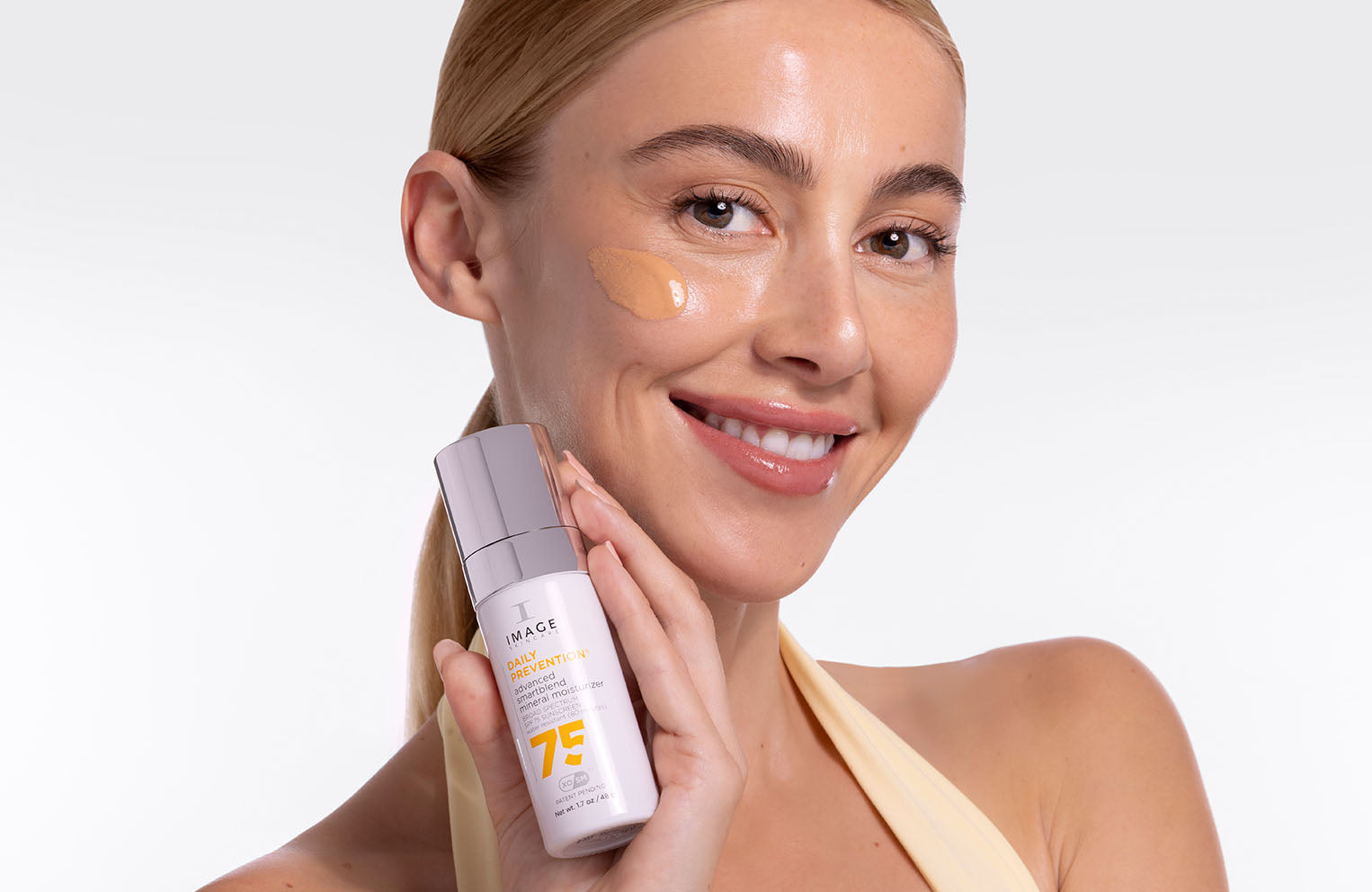
Sensitive, post-procedure, or reactive skin: The DAILY PREVENTION® advanced smartblend mineral moisturizer SPF 75 is the best sunscreen for sensitive skin and clinical-grade soothing protection. It features all-mineral zinc oxide and titanium dioxide paired with vegan squalane and a botanical blend of green seaweed, holy Thai basil, and lady's thistle. In a 2-week clinical study, it increased hydration by 87% and decreased skin redness by 21% after a single application.* It is also the SPF of choice in IMAGE Skincare's Recovery Skincare System, designed for post-peel and post-treatment skin.
Dry or dehydrated skin: The DAILY PREVENTION pure mineral hydrating moisturizer SPF 30 delivers lightweight, dewy hydration through high-molecular weight hyaluronic acid. It delivers broad-spectrum SPF 30 protection while increasing hydration levels by 57% in clinical testing.* 83% of users agreed it feels completely weightless after application.*
Oily or acne-prone skin: A hybrid formula using both mineral and chemical filters, the DAILY PREVENTION sheer matte moisturizer SPF 30 keeps shine under control all day with oil-reducing microspheres. 90% of users confirmed zero white cast, and 80% agreed it kept skin mattified throughout the day.*
Uneven skin tone or hyperpigmentation: The DAILY PREVENTION pure mineral tinted moisturizer SPF 30 uses all-mineral zinc oxide and titanium dioxide with a sheer, skin-tone-adaptive tint. It increased hydration by 65% and 87% of users reported more even-looking skin after one application.*
Outdoor activity or mature skin: The DAILY PREVENTION ultra defense moisturizer SPF 50 combines mineral and chemical filters for high-SPF performance with a luminous, no-cast finish. Organic cocoa butter nourishes and hydrates while SPF 50 delivers serious sun defense for outdoor exposure and aging skin.
The Science Behind Broad-Spectrum SPF 30 and Skin Aging Prevention
Choosing a broad-spectrum SPF 30 or higher is the clinical standard recommended by dermatologists for daily skin aging prevention. Broad-spectrum means the formula protects against both UVA and UVB rays. SPF 30 blocks approximately 97% of UVB rays, while higher SPFs offer incremental additional protection.
Every formula in the DAILY PREVENTION collection features XOSM® Technology, a patent-pending encapsulation system that drives powerful antioxidants deeper into skin beyond the reach of sunscreen filters alone. These include ectoin, a stress-protection molecule that shields against oxidative damage; tetrahexyldecyl ascorbate, a highly stable, potent form of vitamin C; and astaxanthin-rich micro-algae, one of the most powerful carotenoids found in nature.
In a photo-protective efficacy study, XOSM Technology reduced pro-inflammatory markers linked to collagen breakdown by up to 118%* providing a true second line of defense against skin aging. For a deeper dive into sun safety best practices, visit our complete guide.
How to Apply and Reapply Sunscreen Effectively
Apply a nickel-sized amount to the face as the final step in your morning skincare routine. If using chemical SPF, apply 20 minutes before going outdoors. Reapply every two hours during sun exposure, after sweating, or after swimming.
For on-the-go reapplication without disturbing makeup, the DAILY PREVENTION protect and refresh mist SPF 40 is the ideal solution. This hydrating dry-oil mist absorbs instantly, refreshes UV protection throughout the day, and is water resistant for 80 minutes. It works seamlessly with every skin type and every routine. Learn more about next-generation SPF moisturizers and how they simplify your daily routine.
Finding the Right Sunscreen for Your Skin
Whether you are drawn to the reflective defense of mineral filters, the lightweight transparency of chemical SPF, or a hybrid formula that delivers the benefits of both, there is a physician-formulated option in the DAILY PREVENTION collection designed for exactly your skin type and lifestyle.
Not sure which formula is right for you? Take the IMAGE Skin Quiz for a personalized recommendation matched to your skin's specific needs.
*See product description page for full study data.
About the Author: Written by Christina Angelacos
Christina is a Senior Editor at IMAGE Skincare focused on clinical skincare innovation, ingredient science, and skin longevity. Passionate about holistic wellness, she believes our healthiest skin comes from the intersection of advanced skincare and mindful living.